Introduction
How to Choose the Perfect Speakers for Your Home Theater is often misunderstood—even by serious buyers.
Most people assume premium brands alone guarantee a cinematic experience. But the truth is, even a ₹20L+ system can underperform if the speaker selection and layout are not engineered correctly.
In high-end home cinema, speakers are not just products—they are part of a precision-designed acoustic system.
Table of Contents
The Common Problem (What People Get Wrong)
When clients ask How to Choose the Perfect Speakers for Your Home Theater, they usually focus on:
- Brand reputation
- Wattage and specs
- Number of speakers
But this approach leads to three major issues:
- ❌ Mismatch between room and speaker capability
- ❌ Poor seat-to-seat consistency
- ❌ Collapsed surround immersion
A Sonus Faber or Martin Logan system in a poorly designed room will never deliver its true potential.
The biggest mistake? Treating speakers as standalone products instead of a coordinated system.
What Makes How to Choose the Perfect Speakers for Your Home Theater Different
It’s Not About Brand—It’s About System Design
When done correctly, speaker selection follows a structured methodology:
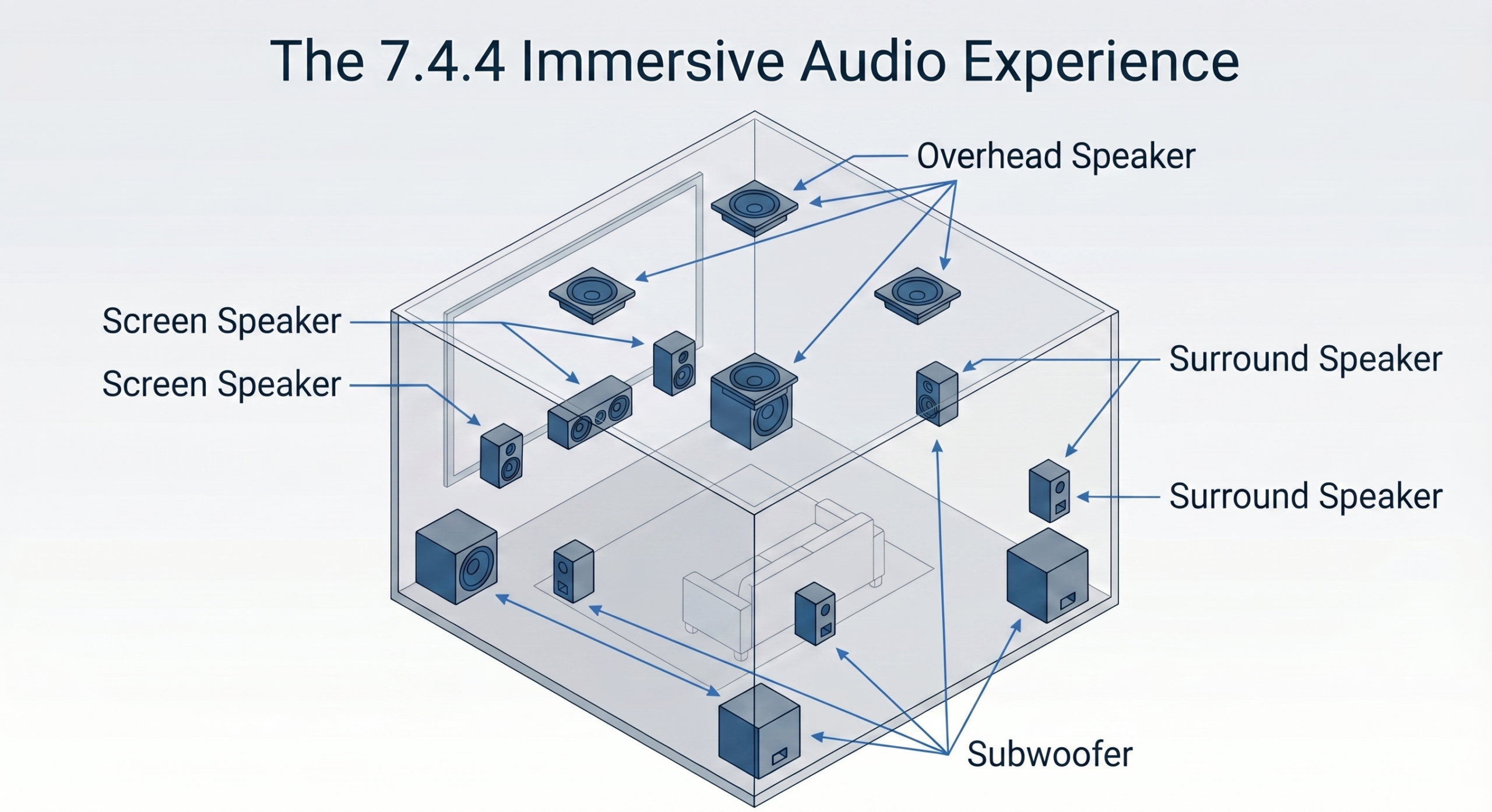
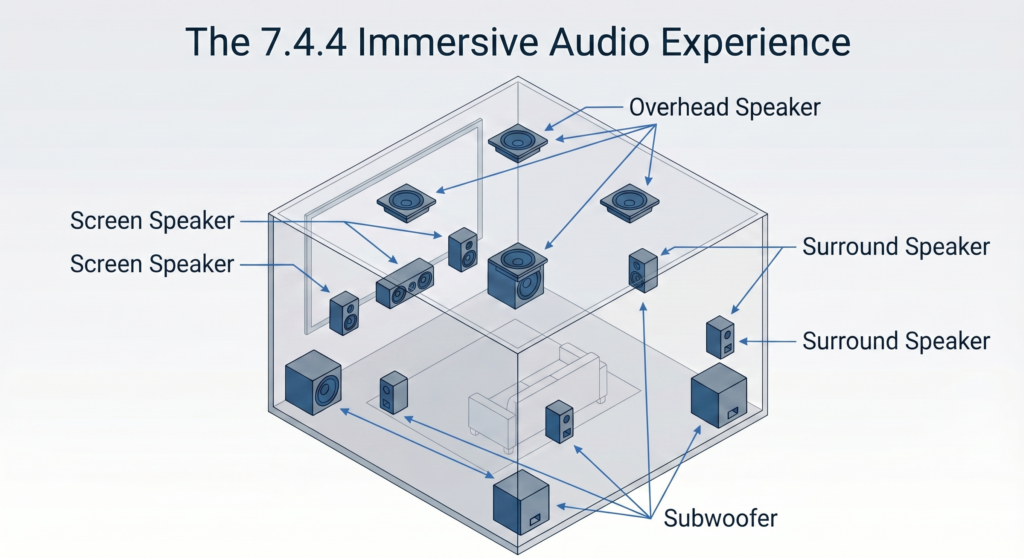
1. Start with Screen Channel Alignment
- Left, Center, Right must align with the screen image
- Dialogue should come exactly from the actor’s position
2. Define Surround Zones
- Side and rear speakers must create directional accuracy
- Every seat—not just the center—should experience correct imaging
3. Bridge the Gap with Wide Speakers
- Premium systems use front wides
- This eliminates the “audio gap” between front and surround
4. Build the 3D Sound Dome
- Height and ceiling speakers create vertical immersion
- Placement depends on ceiling height and seating layout
👉 “Experience the Science of Sound.” Visit India’s premier Reference Level Experience Center in Tamil Nadu. [Krix Home Cinema Experience Center]
Speaker Selection Goes Beyond Specs
High-end speaker selection is based on measurable performance:
- Directivity (Off-axis response) → How sound spreads in the room
- SPL Capability → Can it hit cinema-level peaks without distortion
- Phase Consistency → Ensures precise sound imaging
You can explore how immersive sound is standardized here:
Real-World Insight (India Context)
In India, especially in cities like Chennai, Madurai, or Coimbatore, we see recurring challenges:
Typical Room Constraints
- Room sizes: 120–300 sq.ft
- Low ceiling heights
- Multi-purpose usage (living room + cinema)
Common Buyer Mistakes
- Choosing bookshelf speakers for large rooms
- Ignoring acoustic treatment
- Mixing brands in LCR or Subwoofers
Reality Check
A ₹15L system with proper design will outperform a ₹25L system without it.
Brand Positioning Insight
- Krix → Reference-level cinema performance
- Paradigm / XTZ → High performance with value engineering
- Sonus Faber / Martin Logan → Aesthetic + audiophile excellence
The key is not which brand—but where and how it is used.
Expert Perspective (Critical Section)
This is where most integrators fall short.
1. Performance Levels Define Everything
A serious home theater must target defined performance levels:
- Level 1 → Basic surround
- Level 2 → Enthusiast level
- Level 3 → Cinema-grade experience
- Level 4 → Reference-level perfection
At the highest level:
- Minimum 15+ speaker channels
- Tight frequency consistency across all seats
2. SPL (Sound Pressure Level) Matters
For true cinema impact:
- Front speakers must handle 105–108 dB peaks
- Without distortion or compression
If not:
👉 Explosions feel weak
👉 Dialog clarity drops
👉 Immersion breaks
3. Phase & Tonal Matching
Mixing mismatched speakers causes:
- Blurred soundstage
- Poor localization
- Inconsistent tone
That’s why premium systems use:
✔ Same brand ecosystem
✔ Matched driver technology
✔ Consistent crossover design
4. Calibration is the Hidden Weapon
Even the best speakers fail without proper tuning.
Professional calibration includes:
- REW measurements
- Multi-mic analysis
- DSP optimization
This is what separates:
👉 A “good system” from a reference-level experience
Is It Worth It?
If you’re asking How to Choose the Perfect Speakers for Your Home Theater, you’re likely investing seriously.
Here’s the truth:
- ✔ Yes, it’s worth it—if done correctly
- ❌ No, if treated as a product purchase
A well-designed system delivers:
- Effortless clarity at any volume
- Seamless 360° sound movement
- True cinematic emotional impact
Conclusion
How to Choose the Perfect Speakers for Your Home Theater is not about picking the most expensive brand.
It’s about:
- Engineering
- Placement
- Calibration
- System synergy
The difference between an average room and a breathtaking cinema lies in design intelligence—not product price.
If you’re planning a serious home theater, focus on system design—not just speakers.

Leave a Reply