What I Learned from the Smart Home Expo 2026 Reference Cinema Experience
Inside the reference-grade calibration, acoustic design strategy, and filmmaker’s vision that redefined premium home theater expectations in India.
The Filmmaker’s Vision & System Design Philosophy
What does it really mean when we talk about experiencing cinema “the way the filmmaker intended”?
The Smart Home Expo 2026 11.8.6 immersive audio demo experience in Mumbai answered that question in a way that few installations in India have demonstrated before. Standing inside that reference-grade theater at Booth #E30, Hall 1 (Jio World Convention Centre), you immediately understood: this wasn’t about having the most expensive speakers. It was about capturing something infinitely more valuable—complete immersion.
To achieve that? You need three things working in perfect harmony:
- A well-designed room (acoustics and optics)
- Excellent electronics (speakers, processors, display)
- Meticulous calibration (frequency, timing, phase alignment)
The Smart Home Expo 2026 11.8.6 immersive audio demo proved that when these three elements align, something magical happens. Not by accident. By engineering.
What Makes the Smart Home Expo 2026 11.8.6 Immersive Audio Demo Experience Different?
Why did architects, integrators, and premium home theater enthusiasts across India keep returning to Booth #E30 throughout the expo?
Because the Smart Home Expo 2026 11.8.6 immersive audio demo wasn’t a product showcase. It was a masterclass in system design.
Most high-end installations in India focus on one element: “We have the best projector” or “We have premium speakers.” The Smart Home Expo 2026 demo did something radical—it showed that Reference-grade performance depends on system integration.
The Setup That Redefined Expectations
The 11.8.6 configuration featured Artcoustic Q8-5 speakers as the core audio foundation, paired with powerful Artcoustic Sub4-12 subwoofers positioned strategically to deliver chest-thumping low frequencies with surgical precision. The entire system was processed through a StormAudio Elite 32-channel AV processor, calibrated using Dirac Live ART (Active Room Treatment) technology.
The visual complement? A SIM2 UltraNero 4 projector delivering 7000 lumens of perfectly calibrated HDR performance, projected onto a massive 206″ 2.40:1 Screen Research surface with Lumagen processor handling flawless DTM and NLS color correction.
The ₹3 Crore investment wasn’t in products. It was in precision.
As shared during discussions with calibration experts at the expo, the philosophy was clear: Proper system design and calibration are non-negotiable for achieving filmmaker’s intent.
Inside the 11.8.6 Immersive Audio Setup: What Makes It Work?
What exactly is an 11.8.6 configuration, and why does it matter?
The numbers tell a story:
11.8.6 Configuration Breakdown
- 11 = Main Channels: Front Left, Center, Right + Wide channels + Side and Back surround channels creating complete horizontal soundfield
- .8 = 8 Subwoofers: Strategically distributed throughout the room for seamless bass integration without localization
- .6 = 6 Atmos Height Channels: Overhead/ceiling speakers creating genuine vertical immersion and true three-dimensional spatial effects
This isn’t overkill. This is precision.
Why 11.8.6 Immersive Audio Matters
In traditional 5.1 or 7.1 systems, sound comes from limited positions with bass managed by a single or dual subwoofers. In an 11.8.6 immersive audio system, you experience complete three-dimensional sound:
- Full surround coverage from 11 main channels (front array + comprehensive surround positioning)
- Seamless bass foundation Eight strategically distributed subwoofers can significantly improve bass consistency and reduce seat-to-seat variation, helping create a more uniform listening experience.
- Overhead immersion from 6 Atmos height channels creating genuine vertical soundscape
When a spaceship flies overhead in a film, you don’t just see it moving across the screen. You hear it moving through the space around you, above you, and feel the bass reverberate through your entire body—creating true multi-sensory immersion that conventional systems simply cannot deliver.
The Artcoustic Difference
The Artcoustic Q8-5 speakers are engineered for this exact purpose. Their slim, aesthetically refined cabinets deliver commanding power and flawless detail without dominating the room visually. They’re reference-grade tools, not statement pieces.
The Artcoustic Sub4-12 subwoofers deserve special mention. Positioned behind the cinema screen, these aren’t just adding bass—they’re delivering the cinematic impact directors mix for in commercial theaters. That chest-thumping low frequency response isn’t just felt; it’s part of the emotional storytelling architecture.
The Processing Layer: Where Most Installations Fail
Here’s where most installations fail in India: they buy great speakers and hope for the best.
The Smart Home Expo 2026 11.8.6 immersive audio demo proved why the processor is as critical as the speakers themselves.
The StormAudio Elite 32-channel AV processor isn’t just routing audio. Rather than simply routing signals, the StormAudio processor provides advanced tools for bass management, timing alignment, channel routing and room-correction optimization. With 32 channels of processing capability, it handles the complexity of an 11.8.6 system with room to spare.
The integration of Dirac Live ART (Active Room Treatment) was transformational during setup. Dirac Live can identify and optimize many frequency and timing-related issues, but it does not replace room design, speaker placement, subwoofer strategy, or acoustic treatment.
But—and this is critical—automation isn’t a substitute for expertise. As demonstrated at the expo, expert calibrators use Dirac’s automatic correction as a starting point, then fine-tune using measurements and trained ears to achieve reference-grade results.
The Calibration Experience: Why Those Final Hours Transform Everything
What happened in those final hours before the Smart Home Expo 2026 opened?
This is where the story gets genuinely interesting—and reveals why calibration expertise is worth serious investment.
The Challenge: Setting Up in an Impossible Environment
Setting up a reference-grade 11.8.6 immersive audio demo in a convention center environment presents unique challenges most home theater installers never face:
- The space wasn’t a dedicated theater—it was an open booth in a busy expo hall
- Ambient noise from surrounding booths and foot traffic
- Reflective surfaces (glass, metal, hard flooring)
- Zero acoustic treatment initially
- One night to complete setup and calibration
The constraints demanded careful decisions and efficient workflow planning within limited setup time.
The Calibration Philosophy
Proper calibration elevates a system from “great” to “truly magical.” This isn’t hyperbole—it’s the difference between hearing sound and believing you’re somewhere else.
Here’s what professional calibration actually involves:
- Frequency Response Correction – Improving tonal balance across the audible spectrum while working within room limitations
- Time Alignment – Sound from every speaker reaches your ears at precisely the right moment (millisecond accuracy)
- Polarity Management – Ensuring speaker phases align so bass doesn’t cancel itself out
- Acoustic Problem-Solving – Identifying room reflections, standing waves, flutter echoes, then solving them electronically and physically
The StormAudio Elite processor has all these tools built in. No external DSP devices. No additional wiring. No complexity creep. Just precise control through a network connection and measurement microphone.
How the Magic Actually Happens
The calibration experts at the Smart Home Expo 2026 11.8.6 demo used a hybrid approach that demonstrates best practices:
- Let Dirac Live do the heavy lifting – The automatic room correction handled the biggest acoustic problems, dramatically reducing manual labor
- Measure the results – Verify what the algorithm corrected using analysis tools and measurement microphones
- Fine-tune by ear and analyzer – Listen to familiar music, measure with precision instruments, adjust parametrically until perfection
Visitors who experienced the system throughout the expo were consistently blown away by the “clearly audible” difference those final calibration hours made. The Smart Home Expo 2026 demo proved something fundamental:
Acoustic Design Beyond Standard Treatments
What surprised most architects visiting the Smart Home Expo 2026 booth?
It wasn’t just the speakers. It was the acoustic design strategy that wasn’t about covering every wall in absorption panels.
The Smart Acoustic Approach
The demo room used a selective treatment philosophy:
- Strategic Absorption – Placed at first-reflection points (where sound bounces toward listening positions) and behind speakers to control reflections
- Diffusion Elements – Rather than absorbing all sound energy, diffusers scatter reflections, maintaining natural room acoustics while eliminating problematic early reflections
This approach is vastly superior to “treat every surface” because:
Why Selective Acoustic Treatment Wins
- Preserves room tone – Overly absorptive rooms sound dead, unnatural, lacking liveliness
- Visually elegant – You don’t need wall-to-wall panels that make the space look like a recording studio
- Cost-effective – Targeted treatment outperforms blanket treatment at fraction of cost
- Proven approach – This is how professional mastering studios and reference theaters approach acoustics worldwide
The Artcoustic speakers’ slim cabinet design complemented this philosophy perfectly. Controlled speaker behavior can support acoustic goals, but room design and treatment strategy remain critical. This is reference-grade engineering meeting acoustic reality.
For anyone planning a premium home theater in India, understanding acoustic treatment strategy is as important as speaker selection. This demo demonstrated how selective acoustic strategies can support both performance and aesthetics when implemented carefully.
Why This Demo Matters for India’s Premium Home Theater Market
Why is the Smart Home Expo 2026 11.8.6 immersive audio demo experience particularly significant for India?
Because it solved problems that are uniquely Indian.
The Room Size Challenge
Premium home theaters in India typically don’t have the ideal dimensions. Most installations work with:
- 18’x16’x10′ (common in urban penthouses)
- 15’x14’x9′ (apartment conversions)
- Custom dimensions in villas with unique architecture
The Smart Home Expo demo showed that advanced immersive systems can be adapted to challenging room conditions when design and calibration are approached carefully. The key? System calibration becomes even more critical in smaller spaces where room modes (standing wave resonances) are more pronounced.
The Investment Reality for Premium Buyers
Premium home theater buyers in India aren’t price-shopping. They’re investing ₹45-50 lakhs minimum into their installation. But they’re also discerning. They want proof that the system delivers experience, not just specifications on paper.
The Smart Home Expo 2026 demo provided that proof. When an architect saw a reference-grade 11.8.6 immersive audio system perform flawlessly in a challenging environment (a convention center), they understood: “This will work even better in my client’s dedicated room.”
The Expertise Gap
India has excellent integrators, but reference-grade calibration expertise is rare. The Smart Home Expo demo showcased what’s possible when calibration is treated as seriously as component selection.
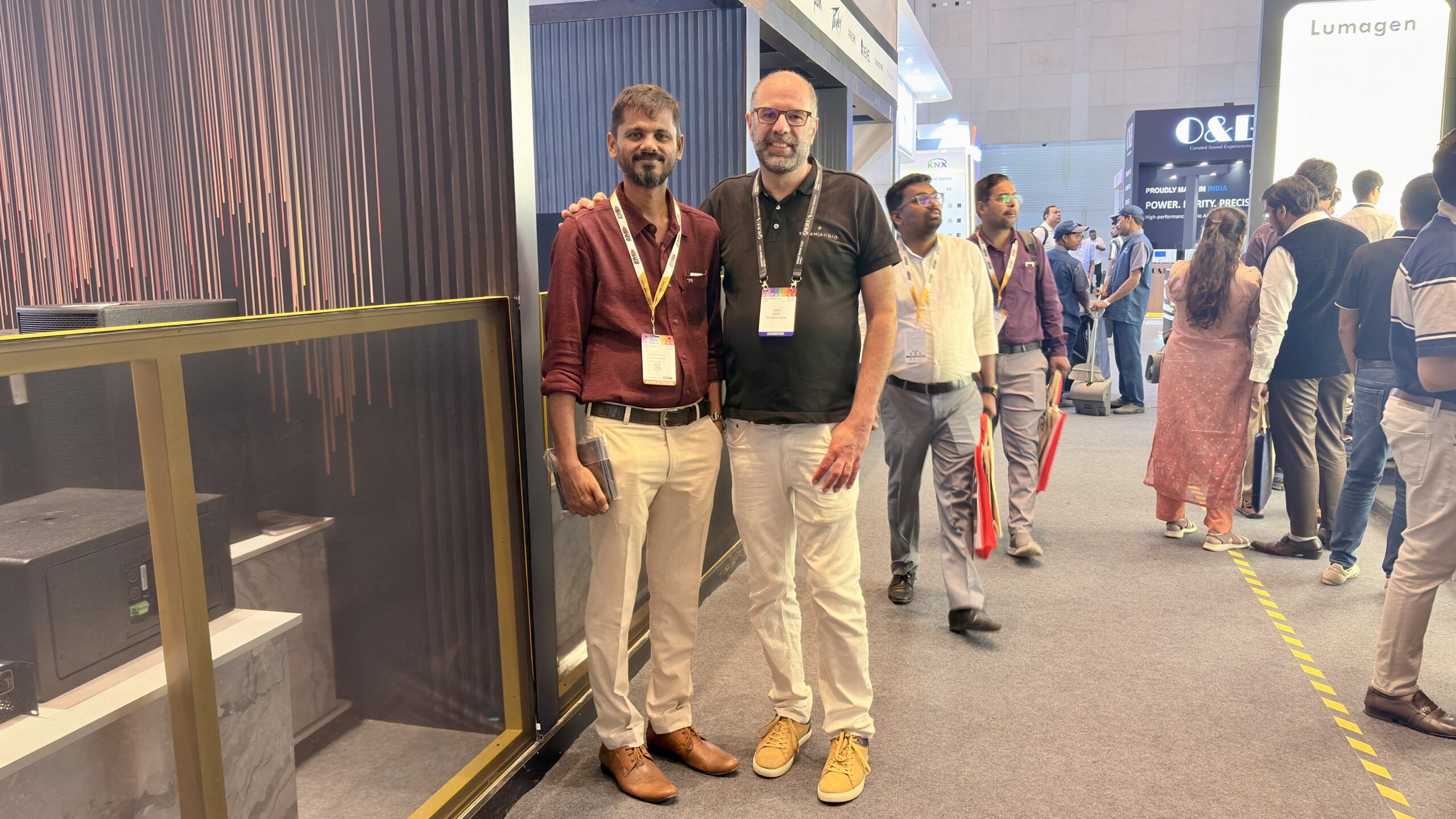
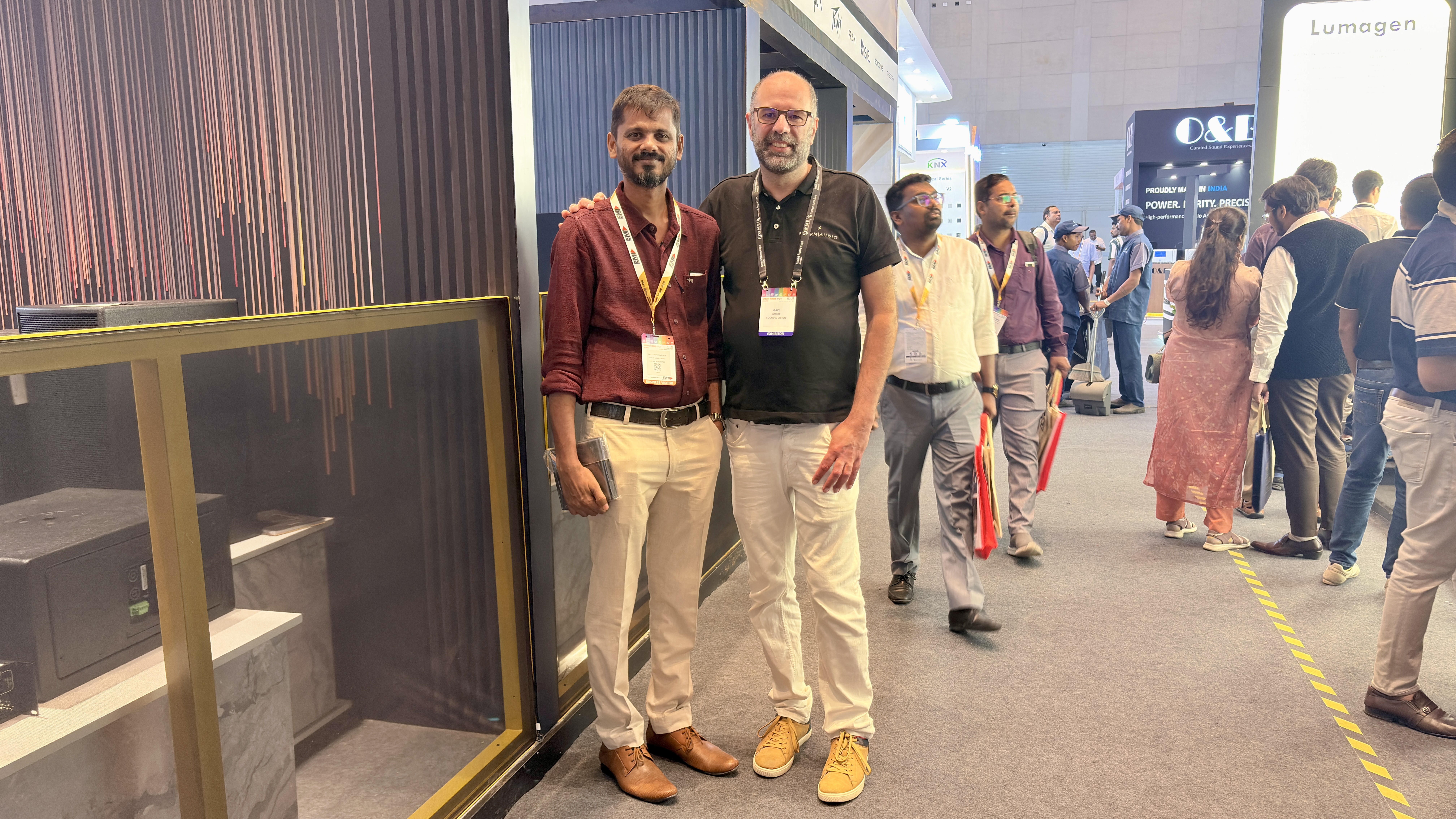
Meeting with specialists like Gaël Sicot from StormAudio at the expo revealed something important: the calibration process itself is a competitive advantage for Indian installers. Those who invest in proper measurement tools, training, and methodology will stand apart in the premium market.
For us at SMART Home Cinema, the discussion reinforced something we strongly believe in: premium home cinema performance is not created by equipment alone. Measurement methodology, calibration workflow and room behavior play an equally important role. This philosophy is reflected in our own reference-level demonstration environment built around Krix cinema solutions and supported by advanced measurement practices, including HAA Level 3 certified calibration approaches.Is Reference-Grade 11.8.6 System Design Worth the Investment?
Let’s address the question every serious buyer asks: “Is this for me?”
The answer isn’t “yes” or “no.” It’s “it depends on what you value.”
You Should Consider 11.8.6 If:
- You view home cinema as a primary entertainment form (not occasional viewing)
- You’re serious about experiencing content as creators intended
- You have a dedicated room or are building one specifically for cinema
- You value the emotional, transportive experience over technical bragging rights
- You’re willing to invest in proper calibration, not just component selection
- You’ll use the system regularly enough to justify the investment
It’s Overkill If:
- Your room serves multiple purposes (movie watching + gaming + lounging + dining)
- Your listening position is constantly changing
- You prioritize aesthetics over performance
- You’re not comfortable with professional acoustic room treatment
- Your budget is below ₹40 lakhs total investment
The Real Investment Question
Reference-grade 7.4.4 / 9.4.6 immersive audio systems (like what the Smart Home Expo 2026 demo showcased) typically cost:
- Components: ₹45-50 lakhs minimum
- Professional calibration: ₹3-5 lakhs
- Room design/construction: ₹10-15 lakhs (depends on existing space)
- Total investment: ₹60-70 lakhs for a complete, reference-grade system
Is a ₹60-70 lakh investment worth it?
Only if your use case justifies it.
But here’s what the Smart Home Expo 2026 demo proved: a properly designed, calibrated 11.8.6 system doesn’t depreciate like consumer electronics. A properly designed room and infrastructure can remain relevant for many years while electronics may evolve.
The ₹3 Crore reference demo at the expo? That’s an investment in proof-of-concept and brand credibility. Your own 11.8.6 system will be proportional to your space and budget, but the principles remain identical.
The Real-World Difference: What Actually Changes
What actually changes when you watch a film in the Smart Home Expo 2026 11.8.6 immersive audio demo versus a conventional home theater?
Before: Standard System Experience
- You’re watching a movie
- Sound comes from left, right, center, maybe surrounds
- Bass is felt generically when explosions happen
- Dialogue occasionally seems disconnected from action on screen
- You’re aware you’re in your home theater
- The experience feels like content playing in a room
After: Reference-Grade 11.8.6 System
- You’re in the movie from moment one
- Sound comes from every direction, including above (true 3D immersion)
- Bass integrates seamlessly with the image, adding emotional weight without distraction
- Dialogue feels like it’s coming from the actor’s mouth, not a speaker
- The room disappears from your consciousness
- You emerge from the experience as if waking from a dream
- You understand why the filmmaker made specific creative choices
System Design Over Product Chasing: The Real Lesson
What makes the Smart Home Expo 2026 11.8.6 immersive audio demo experience One of the most discussed demo experiences at Smart Home Expo 2026?
Because it refused to choose between components.
It didn’t rely on premium speakers alone.”
It didn’t assume that high-end electronics could compensate for room acoustics and system integration.”
It didn’t rely on individual components to carry the experience.”
Instead, it proved something fundamental: reference-grade home theater is a system, not a collection of products.
The Artcoustic speakers, Artcoustic subwoofers, StormAudio processor, SIM2 projector, Screen Research screen, and Lumagen color corrector all served one purpose—to faithfully reproduce the filmmaker’s vision in a room where acoustics, optics, and electronics worked in perfect orchestration.
That’s why integrators, architects, and serious enthusiasts kept returning to that booth. That’s why the Smart Home Expo 2026 11.8.6 immersive audio demo has become the reference point for premium home theater installation in India.
The Takeaway
When planning a serious home theater, stop thinking about individual products. Start thinking about system design.
- A great processor won’t save mediocre speakers
- Premium speakers won’t overcome a poorly designed room
- Expensive components won’t deliver reference-grade experience without proper calibration
But when all three elements—design, electronics, calibration—work together? That’s when magic happens.
The Smart Home Expo 2026 wasn’t just showcasing products. It was demonstrating a philosophy: that true luxury in home cinema isn’t about the price tag. It’s about precision, expertise, and unwavering commitment to the filmmaker’s vision.
That’s what reference-grade means. And that’s why it matters.
Ready to Explore Reference-Grade Home Theater?
Planning a premium home cinema for your new home? Start with the experience you want—not just a list of products. At SMART Home Cinema, we help homeowners approach home cinema as a complete system through room planning, immersive audio design and calibration-focused implementation. Visit our reference-level experience environment or connect with us to discuss your project.
Discuss Your System Design