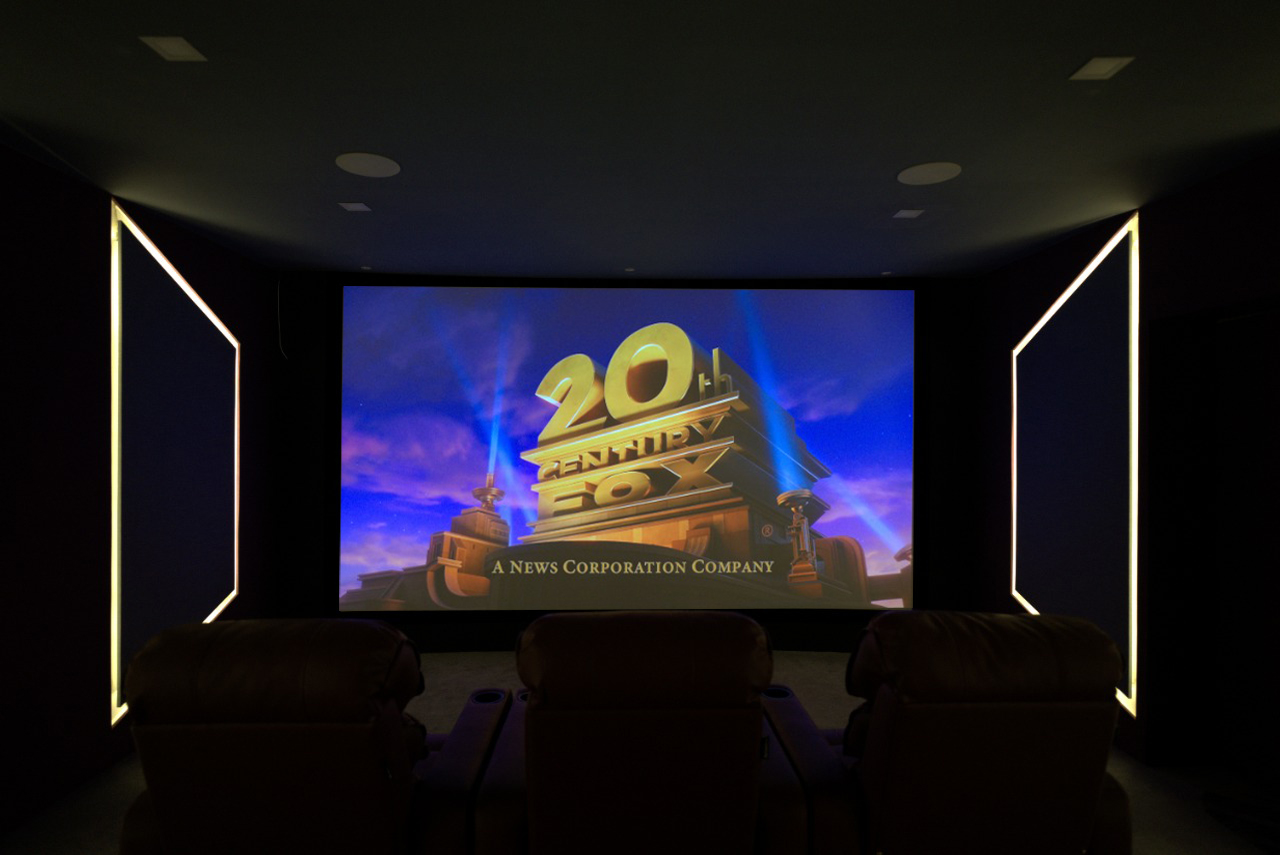
Cinema Room Design
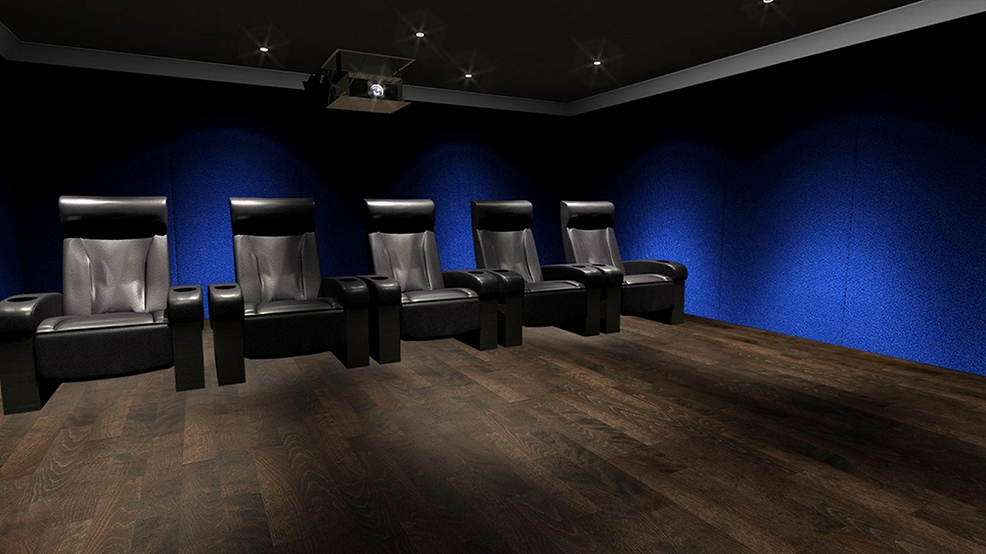
Every room has issues that need to be dealt with at the design stage and the best rooms are always those that have had the best application of intelligent compromises applied.
We design every room to published practice for immersive audio and video, so the system's behaviour is predicted on paper before installation begins — not discovered afterwards.
We can advise you on everything you need to turn a space into a home cinema for your favourite film. We take care of the acoustics, cable management, screen system, projection, LED lighting, curtain systems, and even the carpets.
Cinema Seating
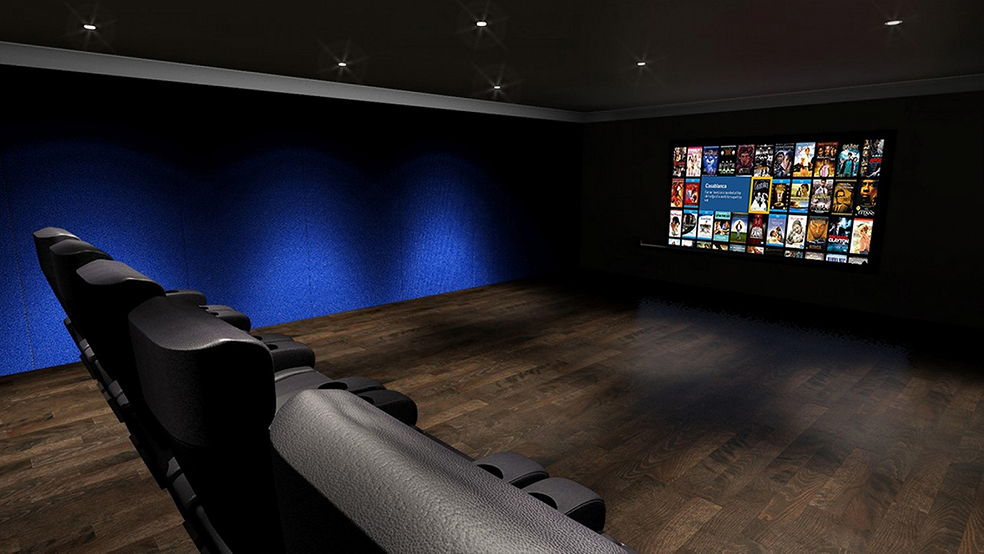
With a primary focus on the audio, visual and décor elements, it is easy to understand why many private home cinema buyers tend to overlook an absolutely essential element to their viewing experience - home cinema seating. The importance of cinema chairs, sofas and other seating options for your home cinema project should certainly not be underestimated. We will advise on the best home cinema seating options, including the number of seats and placement, and guide you through the process of designing an exceptional home theatre.
Lighting
Nothing says "the film is about to start" quite like seeing those lights dim as you are enveloped in darkness – an effect your home cinema can replicate. Too much stray light washes out contrast on the screen; too little leaves the room hard to move around in during a film. We plan dimmable, controlled lighting that keeps the room usable without touching the picture.
Why Should Cinema Room Design Start With the Room, Not the Equipment?
A great home cinema starts long before the projector, speakers, or AV receiver are selected. The most successful cinema rooms are planned around room dimensions, seating positions, screen size, speaker locations, acoustics, and viewing habits.
At SMART Home Cinema, room design drives equipment selection — not the other way around. Many homeowners begin by choosing a projector or speaker package. However, the room itself has the greatest influence on the final experience.
Before selecting any equipment, consider:
- Room dimensions and ceiling height
- Seating capacity and row configuration
- Screen size goals and viewing distance
- Speaker layout requirements for your chosen audio format
- Lighting control and ambient light management
- Acoustic treatment requirements for the room
A well-planned room creates a better experience and avoids the costly mistakes that come from retrofitting decisions that should have been made at the design stage.
What Room Sizes Work Well for a Home Cinema?
Every room is different, but proportions matter as much as size. Two rooms with the same floor area can behave very differently in the bass: a room somewhat longer than it is wide gives the bass a better chance of being even across the seats, while a near-square room tends to produce strong peaks and gaps that treatment alone struggles to fix. The best room is not necessarily the biggest room — the goal is balanced viewing angles, proper speaker placement, and controlled acoustics.
About 11′6″ × 20′ (3.5 × 6.1 m)
Suitable for:
- Dedicated entry cinemas
- 5.1.2 or 5.2.2 Dolby Atmos systems
- Two rows, about 4 recliners
- Screen sized from the front row
About 13′6″ × 22′6″ (4.1 × 6.9 m)
Suitable for:
- Premium cinema rooms
- Larger screen sizes
- 7.2.2 or 7.2.4 Dolby Atmos systems
- Two rows, about 6 recliners
About 15′6″ × 25′6″ (4.7 × 7.8 m) and Above
Suitable for:
- Luxury home cinemas
- Two rows, about 8 recliners
- Reference-level performance goals
- 7.2.4 and above Dolby Atmos systems
Is your room 12 × 16 ft, 14 × 20 ft or another size? It can still become an excellent cinema — we plan around the proportions you have. Where a wall has not been built yet, moving it by a foot or two is often the least expensive acoustic improvement in the whole project.
How Large Should the Screen Be? Bigger Is Not Always Better
One of the most common mistakes homeowners make is selecting a screen size before determining seating distance. The screen is purchased, the room is arranged around it, and the result is either a screen that is too close for comfortable viewing or one that is too small to create real immersion.
The correct approach is always:
Seating Position → Viewing Distance → Screen Size
In a two-row room, the front row sets the screen size. It is the closest seat, so the screen is sized for the front row to take in the whole image comfortably — and the rear row then sits well inside a comfortable viewing angle.
Screen Too Small
Reduces immersion. The image does not fill enough of your field of view to create the sensation of being inside the content. The cinematic experience is lost — it feels like watching a television, not a cinema.
Screen Too Large
Causes eye fatigue during longer viewing sessions. The viewer is forced to move their eyes across the image rather than taking it in naturally. This becomes uncomfortable during two-hour films and tiring for sport and fast-moving content.
Proper screen sizing creates a natural cinematic experience that remains enjoyable across movies, sport, gaming, and streaming content — every time you press play.
How Should Seating Be Laid Out in a Home Cinema?
Seating determines how the entire room performs. It affects viewing angles, surround sound performance, bass consistency, and overall comfort. The goal is not simply to fit the maximum number of seats into a room — the goal is a consistent experience for every viewer in every seat.
Single Row Seating
Best for:
- Smaller dedicated rooms
- Maximum performance consistency across all seats
- Simpler room design and acoustic treatment
- Homeowners who prioritise performance over capacity
Two-Row Seating
Best for:
- Larger dedicated rooms
- Larger families and regular group viewing
- Dedicated luxury cinema spaces
- Proper riser platforms required for rear row sightlines
Proper planning is required to maintain sightlines and audio performance for both rows — rear seats must not be acoustically compromised by the room's back wall. We plan for up to two rows: a third row usually sits too far from the screen for an immersive picture, so larger rooms get wider rows rather than more of them.
Which Dolby Atmos Layout Suits Your Room?
Dolby Atmos is most effective when speaker locations are considered during room planning — not added as an afterthought after construction is complete. Many installation problems occur precisely because speakers were added after the room design was already finalised, forcing compromises in ceiling speaker placement, wiring routes, and speaker angles that limit the performance of the entire system.
5.1.2
Best for:
- Smaller dedicated cinema rooms
- Entry-level Dolby Atmos systems
- Rooms around 12 ft wide
5.2.2
Best for:
- Two subwoofers, placed correctly, usually give more even bass across the seats than one
- Two-row rooms where seat-to-seat consistency matters
7.2.2
Best for:
- Larger rooms
- Enhanced surround immersion
- Wider seating layouts
7.2.4 and Above
Best for:
- Dedicated premium cinema rooms
- Advanced immersive audio systems
- Reference-level performance goals
The ideal layout depends on room dimensions, seating positions, and performance goals. Ceiling height matters because it sets where overhead speakers can sit relative to the seats. A ceiling of 9 ft or more works best for in-ceiling Dolby Atmos speakers; lower ceilings are planned around, using speaker position and seating height, rather than ruled out.
Why Should a Cinema Be Designed for What You Actually Watch?
Most homeowners in India watch Netflix, Amazon Prime Video, Disney+ Hotstar, Apple TV+, and YouTube every day. Very few watch Blu-ray or physical media regularly. Yet many systems are still demonstrated and tuned around physical media and reference disc content.
There is a gap between what a system is designed for and what the homeowner actually watches every day. At SMART Home Cinema, we close that gap.
Every system we design is calibrated and verified with the sources our clients actually use.
Display Calibration
Calibrated for streaming colour profiles and HDR tone mapping — not just for disc playback at factory settings.
Audio Calibration
Verified with Dolby Atmos streaming content from Netflix and Apple TV+ — the same sources you will use every day.
System Configuration
Configured to deliver consistent performance across streaming, gaming, sport, and physical media — whatever you press play on.
If your cinema is tuned for demonstration content but you stream every evening, you are not getting the performance your investment deserves. A cinema designed and calibrated around your actual viewing habits performs better on the content you watch.
What Are the Most Common Home Cinema Design Mistakes?
Mistake 1 — Equipment Before Room
Choosing a projector or speaker package before the room is planned. Equipment selected without room context is often the wrong size, the wrong power rating, or placed in the wrong position — limiting performance regardless of brand or cost.
Mistake 2 — Ignoring Acoustic Treatment
Even premium speakers struggle to overcome poor room acoustics. Untreated rooms produce reflections that smear dialogue, uneven bass that varies seat to seat, and a soundstage that collapses rather than envelops. Acoustic treatment is not optional — it is foundational.
Mistake 3 — Screen Before Seating
Selecting screen size before determining seating distance and viewing angles. The result is either a screen that is too small for immersion or one so large that it causes eye fatigue. Seating comes first — screen size follows.
Mistake 4 — Speakers After Construction
Planning speaker locations after construction begins. Speaker positions should influence room design — not be forced into whatever space remains after walls, ceilings, and fittings are complete. Compromised speaker placement limits Dolby Atmos performance, and is expensive to correct once ceilings are closed.
Mistake 5 — Aesthetics Over Acoustics
A home cinema should look beautiful — but aesthetics should never compromise acoustics, screen visibility, or speaker placement. Decorative panels placed for appearance rather than performance, reflective surfaces retained for visual reasons, and speakers moved for symmetry all reduce the final result.
Mistake 6 — Designed for Demo, Not Daily Use
Designing for demonstration content instead of everyday viewing. Most homeowners watch Netflix, Prime Video, Apple TV+, and YouTube every day — not reference Blu-ray discs. A cinema calibrated only for demonstration content underperforms on the content you actually watch.
How Does Room Design Show Up in Measurements?
Design decisions are verified by measurement, not by ear alone. In our Madurai experience center reference room — four subwoofers, six seats, measured with one calibrated microphone in REW — setting each subwoofer individually for delay, level and polarity reduced the largest seat-to-seat bass difference from 14.6 dB to 6.9 dB between 20 and 100 Hz (REW psychoacoustic smoothing). A shared EQ alone cannot change seat-to-seat differences; per-subwoofer alignment can. This is a room result, not a product specification. The full before-and-after data is on our Audio Calibration page.
Frequently Asked Questions — Cinema Room Design
What is the best room size for a home cinema?
There is no single ideal size. Proportions matter as much as floor area: a room somewhat longer than it is wide usually gives more even bass across the seats than a near-square one. A room of about 11′6″ × 20′ (3.5 × 6.1 m) suits a dedicated two-row cinema. Rooms of about 15′6″ × 25′6″ (4.7 × 7.8 m) and above suit luxury cinemas with reference-level performance goals.
How large should my projection screen be?
Screen size should be determined after seating positions and viewing distances have been established. The correct sequence is: seating position → viewing distance → screen size. In a two-row room, the front row sets the screen size. A screen that is proportionally correct for your seating distance delivers more comfortable immersion than the largest screen that will physically fit in the room.
Is a dedicated room required for Dolby Atmos?
No. However, a dedicated room provides greater flexibility for ceiling speaker placement, acoustic treatment, and light control — all of which improve the Dolby Atmos experience significantly. In a media room or living space, height speaker placement is often compromised by ceiling design or structural constraints, limiting the effectiveness of the overhead channels.
Can I build a home cinema in a 12 ft × 16 ft room?
Yes. A 12 ft × 16 ft room can deliver an excellent cinema with a 5.1.2 or 5.2.2 Dolby Atmos system and correct acoustic treatment, with the screen sized from the seating distance. If the walls are not yet built, a slightly longer room helps the bass. Our experience center in Madurai has a 12 ft × 17 ft Dolby Atmos room, so you can hear what this room size can achieve.
When should I start planning my home cinema?
Ideally during the architectural or construction stage. Early planning allows better decisions regarding room dimensions, speaker wiring, acoustic integration, and structural preparation for screen mounting and seating platforms. That said, many of our projects are retrofits — completed homes can be converted into excellent cinema rooms with the right design approach and informed compromises.
How many seating rows can a home cinema have?
We plan for up to two rows. A third row usually sits too far from the screen for an immersive picture, so larger rooms get wider rows rather than more of them.
What ceiling height do I need for Dolby Atmos?
A ceiling of 9 ft or more works best for in-ceiling Dolby Atmos speakers. Lower ceilings are planned around, using speaker position and seating height, rather than ruled out.
How does SMART Home Cinema approach cinema room design differently?
We start with room measurement and acoustic analysis before any equipment is recommended. Every system is calibrated with professional measurement tools by Paul Joseph Klattan, HAA Level 3 certified. HAA is a professional certification body for home cinema acoustics and calibration; Level 3 is its highest tier. We also calibrate for the content you watch every day — Netflix, Apple TV+ and Prime Video — not only for demonstration discs.
Continue Reading
Acoustic Treatment
Why the room matters more than the equipment — and how acoustic panels, bass traps, and diffusers work to improve dialogue, bass, and immersion.
Acoustic Treatment →Audio Calibration
HAA Level 3 certified audio calibration — what it means, how it works, and the measured six-seat bass results from our reference room.
Audio Calibration →Build Your Reference Cinema
Our measured, verified approach to reference-level home cinema. Serving South India.
Build Your Reference Cinema →Planning a Cinema Room in Tamil Nadu?
Whether you are at the architectural stage or retrofitting an existing room, we can help you evaluate the right design for your space, budget, and expectations. Visit our experience center in Madurai and hear the difference a properly designed cinema room delivers.
Anna Nagar, Madurai | Serving Tamil Nadu and South India