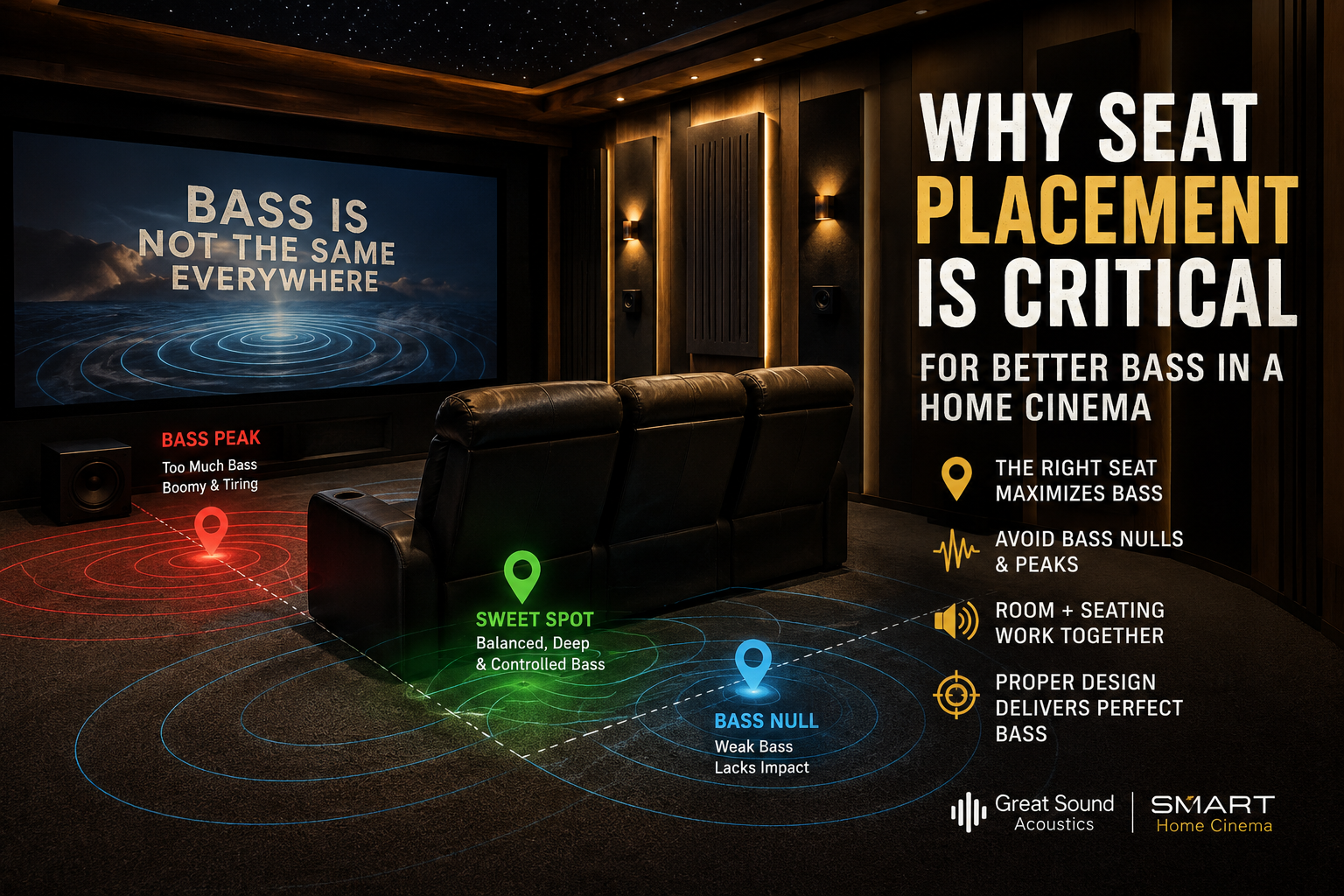
Why Your Home Cinema Seat Matters
More Than Your Subwoofer
A bigger subwoofer cannot move a cancellation. Moving your chair can. The physics that decides how bass behaves in a room — and why seating is planned before equipment is chosen.
Almost every enquiry we receive about weak or boomy bass opens the same way: which subwoofer should I upgrade to. It is a reasonable question and it is usually the wrong one. In a closed room, home cinema seat position changes what you hear at low frequencies more than most equipment decisions do.
Low frequencies do not simply travel from the driver to your ears. They bounce, return, and interfere with themselves. That interference creates a fixed pattern of strong and weak zones across the floor plan. Your chair sits somewhere on that pattern, and where it sits decides how much bass reaches you.
The seat is not furniture. It is the last component in the signal chain — and the only one that costs nothing to get right, provided you decide it early enough.
Why does the same room sound different in every seat?
Low frequencies are long waves. A 30 Hz tone measures roughly 11 metres from one crest to the next — longer than most rooms it is played in. At that scale sound does not travel as a beam you can aim. It fills the space and reflects off every hard surface.
When a reflected wave meets the wave that produced it, the two combine. Where crests line up, pressure adds and the note gets louder. Where a crest meets a trough, they subtract and the note weakens or disappears.
The result is a fixed, permanent map of loud zones and dead zones, set entirely by the dimensions of the room. Change the subwoofer and the map is identical. Change the amplifier and the map is identical. The only thing that changes what you hear is where you put your head.
One person calls the bass overwhelming while someone two metres away says there is almost none. Both are describing what they hear accurately. They are sitting in different zones of the same map.
Where do the cancellations actually fall?
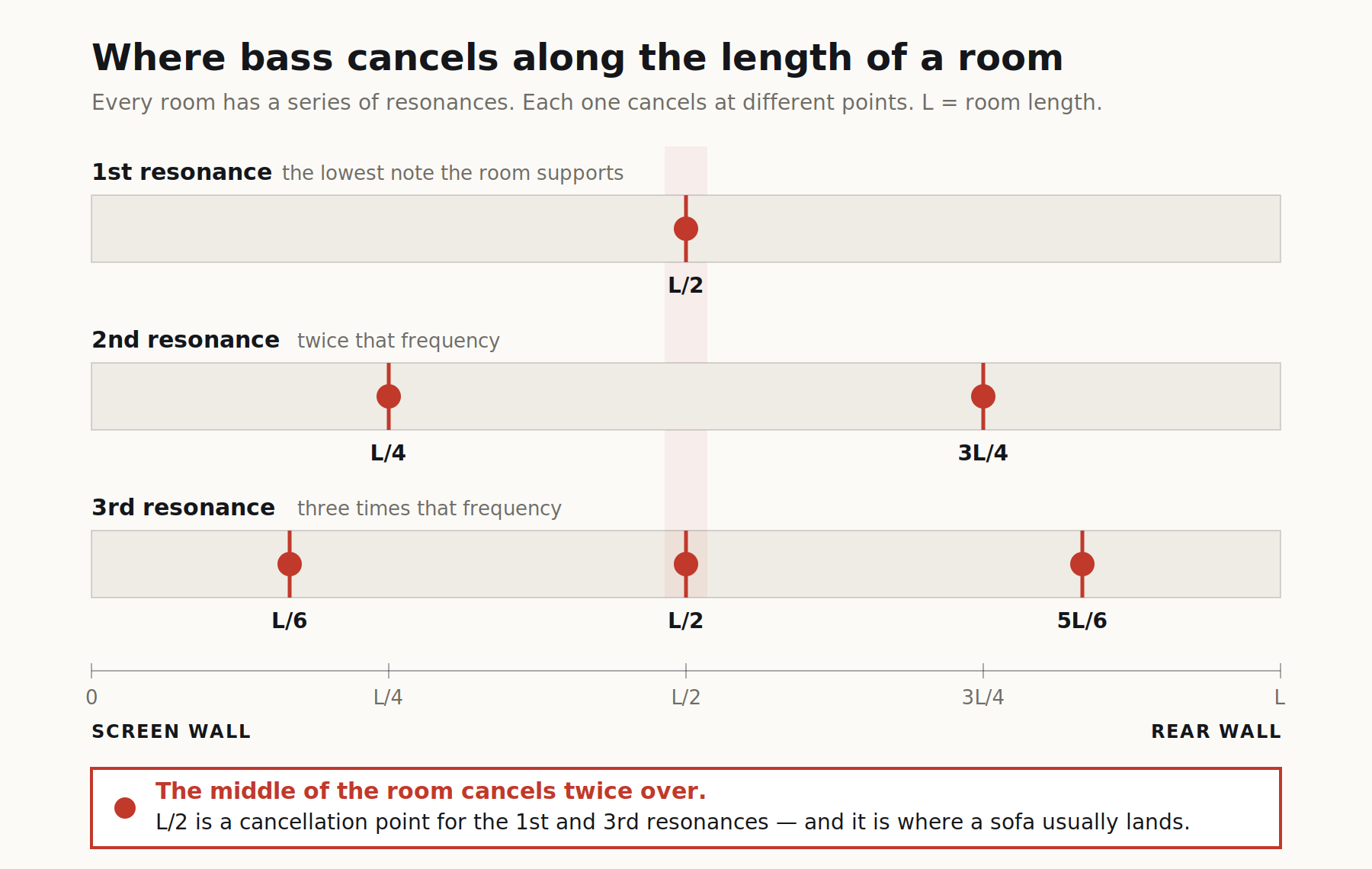
They are not random and they are not a matter of opinion. Each room dimension produces its own series of resonances, and the first one is set by a single division.
343 ÷ (2 × 6.7) = 343 ÷ 13.4 = 25.6 Hz
The room then resonates again at every whole multiple:
51.2 Hz · 76.8 Hz · 102.4 Hz
Arithmetic you can check on a calculator — not a measurement of any particular room.
Each of those resonances cancels at its own set of points, and the pattern is simple.
Put those three on the same floor plan and the problem becomes obvious.
What does a cancellation actually sound like?
Certain low notes arrive at that seat far weaker than they should. Nothing is broken. The system is working exactly as designed, and the seat is in the wrong place.
- Explosions lose weight and land as a thud
- Music sounds thin, with no body underneath it
- Kick drums lose impact and turn into a click
- Some bass notes are missing entirely while others are perfectly fine
- Turning the volume up does not bring them back
The instinctive response is to blame the subwoofer and buy a larger one. That rarely helps, because the problem is not how much energy leaves the driver. It is what survives the journey to that particular chair.
Why is sitting against the rear wall a trap?
This is the opposite failure, and it fools people for much longer because it sounds impressive at first.
At a boundary, every resonance reaches maximum pressure at the same moment. On paper nothing is cancelling, which looks ideal. In the room it produces bass that is heavy, slow and much the same on every note, with the longest decay anywhere in the space.
- Bass becomes boomy rather than deep
- Dialogue clarity drops because low frequencies mask the midrange
- Action scenes feel noisy instead of powerful
- Long viewing sessions become genuinely tiring
Too much bass is not premium bass. Good bass is deep, clean, controlled — and consistent from one seat to the next.
If your architect has already drawn the seating, the geometry is worth checking against the room’s resonances before the riser is cast. At drawing stage it costs nothing to change. After construction it cannot be changed at all.
Send us your room drawing on WhatsApp →Is room gain the same thing as boom?
No, and confusing the two leads to the wrong fix. They are separate effects with separate causes.
| Room gain | Modal peak — this is boom | |
|---|---|---|
| Where it happens | Below the room’s lowest resonance | At the resonances and above |
| Mechanism | Wavelength longer than the room, so the air behaves as a sealed volume being compressed | Reflected waves reinforcing each other at specific frequencies |
| Character | Smooth, broadband rise as frequency falls | Narrow, uneven, different in every seat |
| Worst location | Even across the room | At the room boundaries |
| Verdict | Usually a benefit — design for it | A problem — solve by placement and treatment |
Room gain is one reason a properly sealed dedicated room reaches lower and feels more solid than the same equipment in an open living space. It is worth designing for. It is not a substitute for correct seating, and it is not what makes a room boom.
One point specific to Indian construction: room gain depends on how well the space is sealed. Air-conditioning penetrations, false ceilings, unsealed door frames and service openings all leak low-frequency pressure, so many rooms deliver less of it than theory predicts. Getting that right belongs in the same conversation as sound isolation, and both are construction-stage decisions.
Can a bigger subwoofer or room correction fix a bad seat?
Partly, and not the part that matters most.
Equalisation raises a signal that is already present at the microphone. Where the room has cancelled a frequency there is very little arriving to raise, so boosting it consumes amplifier and driver headroom, increases distortion at high output, and can make other seats worse. Room correction is a finishing tool, not a rescue tool.
Multiple subwoofers are the genuinely effective answer, and they work by a different mechanism. One subwoofer creates one fixed map of strong and weak zones. Several placed symmetrically create overlapping maps, so where one is weak another is delivering pressure, and the seats stop disagreeing with each other. Seat-to-seat consistency is one of the criteria the CEDIA/CTA-RP22 immersive audio recommended practice uses to define objective performance levels, which is why we design to it rather than to a subwoofer count.
What we measure, and what it proves
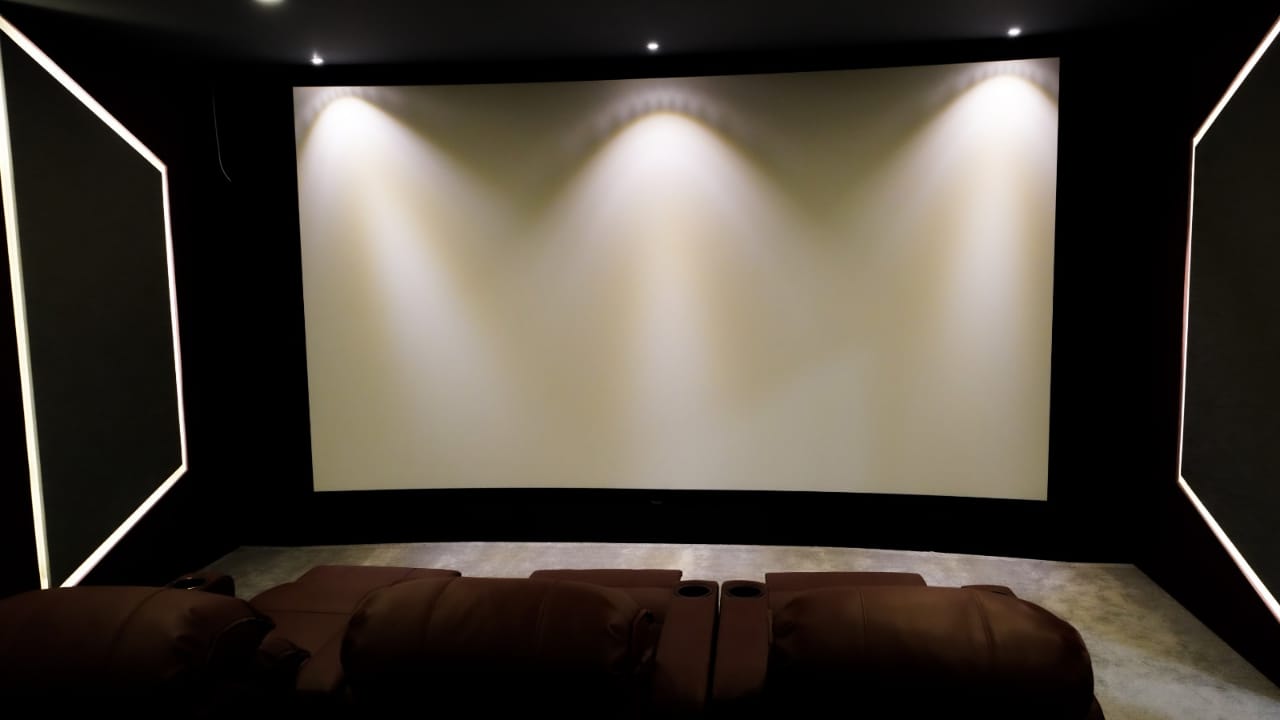
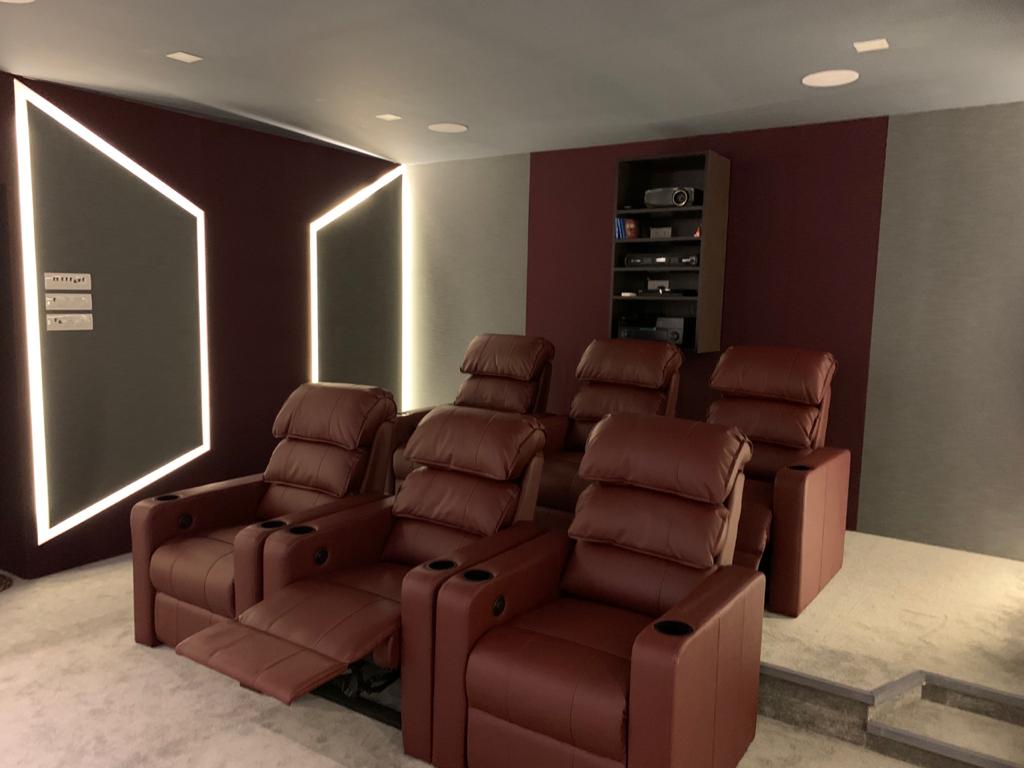
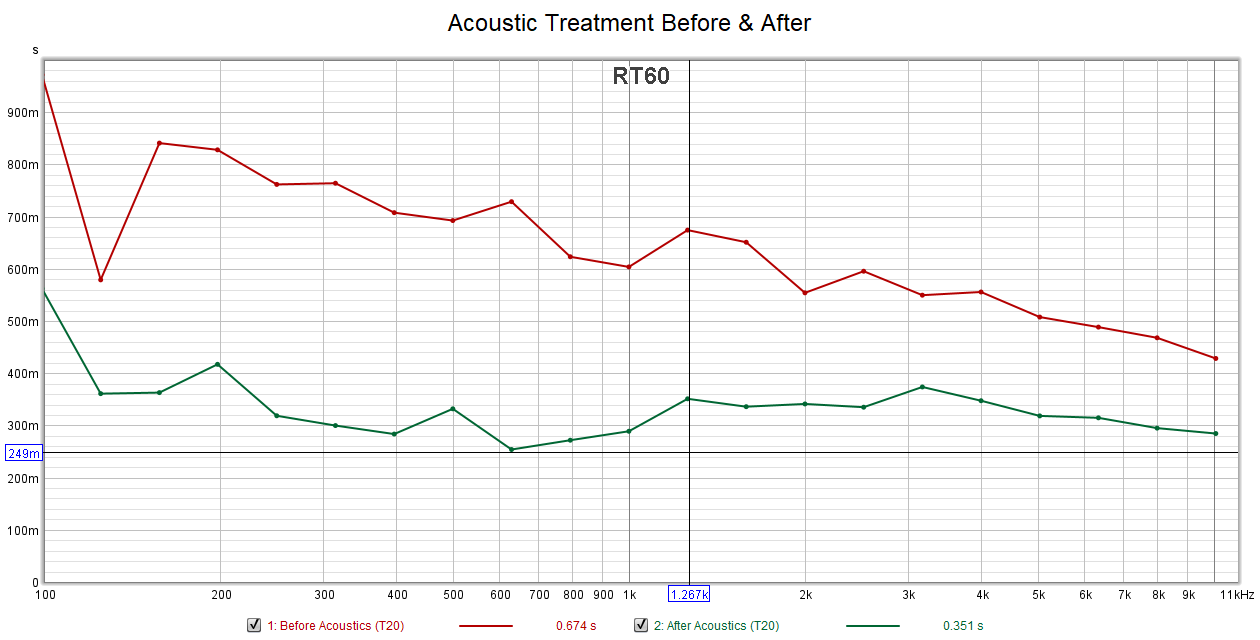
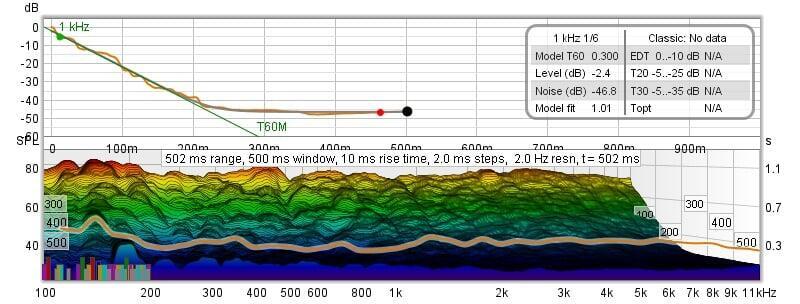
Two results from our own Krix reference room in Madurai, both taken with a calibrated microphone in REW:
That first number is the whole argument. Seat-to-seat consistency is not a happy accident of good equipment — it is the outcome of a seating plan derived from the room’s dimensions, multiple subwoofers positioned by measurement, and treatment that controls what remains. Our experience center is built to CEDIA/CTA-RP22
It is also worth being precise about what can be known when. Room dimensions let us calculate where the problems will be before a wall is built. Only a swept measurement with a calibrated microphone tells us how severe they are, because real rooms have damping, leakage and non-rigid surfaces that arithmetic cannot see.
A room plan predicts the problem. A measurement proves the result. Anyone quoting a decibel figure for your room before measuring it is showing you a model, not your cinema.
What is the correct order of work?
The sequence that works
- Fix the room dimensions and the seating positions. Free at design stage. Permanent afterwards.
- Place the subwoofers by measurement. Count and position both matter. Visual symmetry alone is not enough.
- Treat the room. Broadband absorption at first reflection points, corner bass traps for low-frequency decay, diffusion in the rear half.
- Calibrate and verify. Set crossovers, delays, levels and target curve from measured data, then re-measure to confirm the result.
Follow that order and honest mid-tier equipment performs well above its price. Reverse it and expensive equipment disappoints — which is the single most common problem we are called in to diagnose, and by then the seating is usually bolted to a riser.
If your room is already built and the bass is uneven, look at placement and treatment before another equipment upgrade. We set that out in detail in why most home theater rooms sound worse after treatment, and the full geometry — speaker angles, ear height, surround placement — is covered in our home cinema speaker placement guide.
Design the seat before you specify the system
Better bass is not only a question of more powerful equipment. It is a question of sitting in the right place inside a room that was planned for it. Sit in a cancellation and there is not enough. Sit in a pressure peak and there is too much. Both spoil the experience, and both are decided long before the equipment is delivered.
In Madurai and the surrounding districts our projects begin from ₹8 lakh. Elsewhere in South India the minimum engagement is ₹50 lakh, which is also the level at which genuinely reference-level performance becomes achievable. The seating geometry costs the same in every one of them: nothing, if it is decided at design stage.
Frequently Asked Questions
Does home cinema seat position matter more than the subwoofer?
Below roughly 150 Hz, position has a very large influence. Room resonances create fixed zones of reinforcement and cancellation that no subwoofer can move, because they are set by the room’s dimensions rather than the equipment. A larger subwoofer raises output everywhere but does not change where the cancellations fall. Above that range, speaker quality, acoustic treatment and calibration matter more.
Why does the middle of the room sound bad for bass?
The exact midpoint of a room is a cancellation point for the first resonance along that dimension, and for every odd-numbered resonance above it. It is one of the weakest positions in the entire room for low frequencies, and it is where a sofa naturally lands when a room is laid out by eye rather than calculated.
Is sitting against the rear wall good for bass?
It gives you more bass, not better bass. At a boundary every resonance reaches maximum pressure simultaneously, producing heavy one-note bass with the longest decay in the room. Leave meaningful distance from the rear wall and treat that wall properly with absorption and bass trapping.
Can room correction or EQ fix a bad seating position?
No. Equalisation boosts a signal that already exists at that position. Where the room has cancelled a frequency there is almost nothing to boost, so the correction only consumes amplifier and driver headroom and raises distortion at high output. Correction is a finishing step applied after placement and treatment, not a repair for a seating error.
Do multiple subwoofers solve room mode problems?
They reduce them substantially. Several subwoofers placed symmetrically create overlapping pressure patterns, so a weak zone from one is filled by another and the seats become far more consistent with each other. In our own reference room in Madurai this approach, combined with a calculated seating plan and acoustic treatment, produced 3.1 dB seat-to-seat variation across six seats against a typical industry figure of 6 to 10 dB.
What is room gain in a home cinema?
Room gain is the smooth rise in low-frequency output below the room’s lowest resonance, where the wavelength is longer than the room and the air behaves as a sealed volume being compressed. It is broadband and generally beneficial. It is not the same as a modal peak, which is narrow, uneven, worst at the boundaries, and heard as boom.
At what stage should home cinema seating be planned?
At design stage, alongside the room dimensions, and before any civil work on the riser. The resonance frequencies come from the length, width and height, and the workable seating positions follow from them. Seating must also satisfy screen viewing angle and surround speaker geometry at the same time, which usually leaves a small number of valid positions. After construction, those options are largely gone.
How much does a properly designed home cinema cost in India?
SMART Home Cinema projects in Madurai and the surrounding districts begin from ₹8 lakh. For projects elsewhere in South India the minimum engagement is ₹50 lakh, which is also the level at which reference-level performance becomes achievable. Seating geometry costs nothing in any of these tiers, provided it is decided at design stage.
Send us your room before the riser is built
Share the room dimensions and the proposed seating layout. We will tell you where the resonances fall, whether the plan is workable, and what needs to change while changing it is still free.
Discuss Your Room on WhatsApp →Chennai · Madurai · Coimbatore · Bengaluru · Hyderabad · Across South India & Pan-India projects